Last updated 2026-08-18
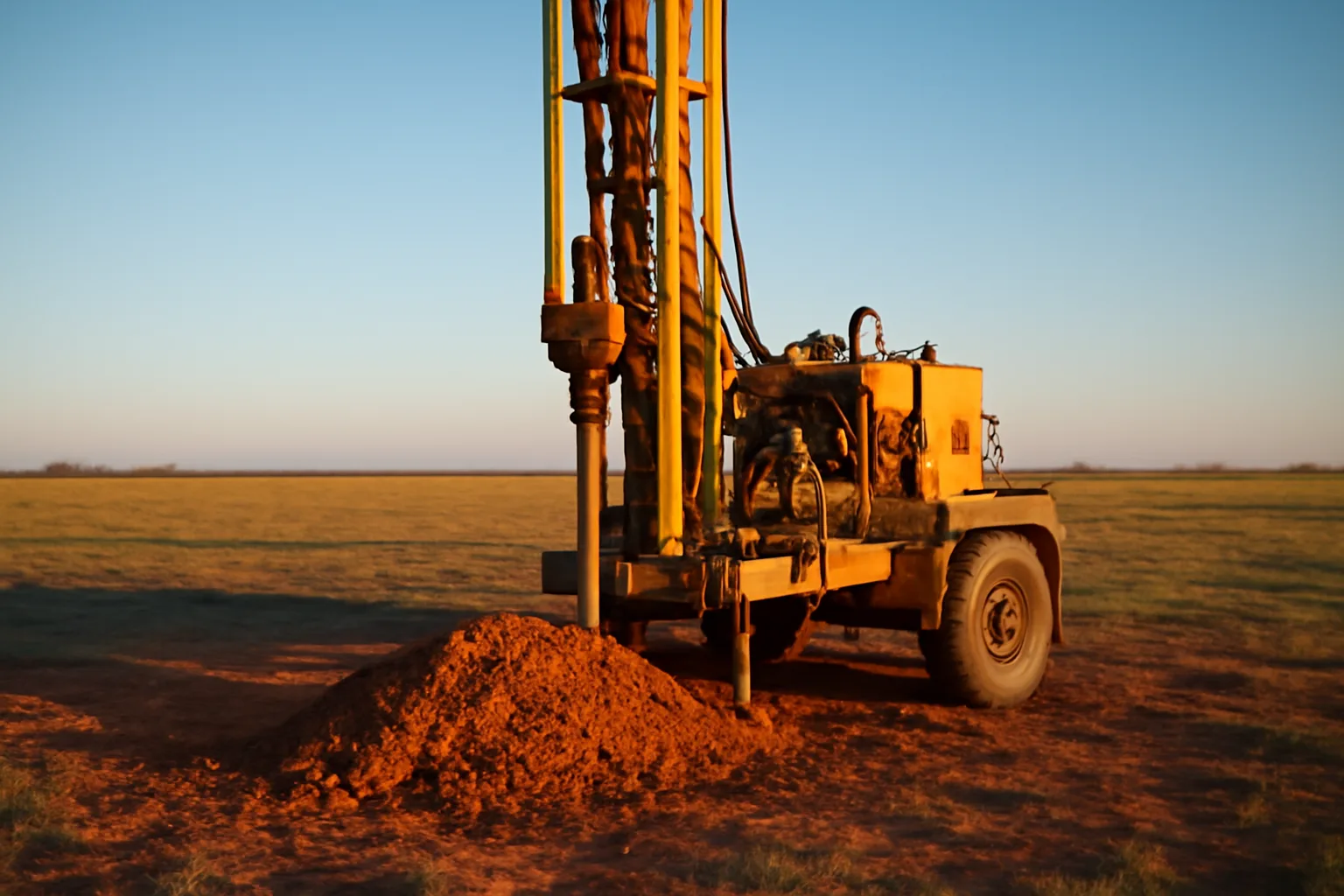
TL;DR
To drill water wells for pay in Texas, you need a license from the Texas Department of Licensing and Regulation (TDLR). You pass a written PSI exam, complete 32 hours of approved training, and carry a $10,000 surety bond. Direct fees run a few hundred dollars. Most applicants finish in two to four months. Confirm current fees with TDLR before budgeting.
Do you need a license to drill wells in Texas?
Yes. Anyone who drills, deepens, alters, or abandons a water well for pay in Texas has to hold a valid license from the Texas Department of Licensing and Regulation. The governing statute is Texas Occupations Code Chapter 1901, written to protect groundwater quality and public health statewide. [1]
The law covers more than the person turning the drill string. A company that contracts for well drilling has to keep at least one licensed well driller in responsible charge. Pump installers fall under a separate license category. Plan to do both drilling and pump work, and you need both licenses.
Drilling without a license is a Class A misdemeanor under Texas Occupations Code Section 1901.551. That means up to a year in jail and fines up to $4,000 per violation under Texas Penal Code Section 12.21. [2] TDLR can also issue cease-and-desist orders and civil penalties. Do not freelance this one.
A landowner drilling their own well on their own land is exempt. That exemption vanishes the moment money changes hands.
What types of well driller licenses does Texas issue?
TDLR issues several license categories under Chapter 1901. Picking the right one before you apply saves you time and money. Here are the main ones.
| License Type | Who It's For |
|---|---|
| Water Well Driller | Drills, deepens, or alters water wells |
| Water Well Pump Installer | Installs or repairs pumps and well equipment |
| Irrigation Well Driller | Drills wells specifically for irrigation |
| Dewatering Well Driller | Drills temporary dewatering wells |
| Monitoring Well Driller | Drills monitoring or observation wells |
Most people starting a general groundwater services business go after the Water Well Driller license first, then add pump installation once the market asks for it. [1]
There's also a responsible-party setup. If you own a drilling company, you register the business separately and name a licensed driller as the responsible party. The company's ability to drill rides on that person's standing. If they let their license lapse, the company cannot legally drill.
What are the education and experience requirements?
Texas splits the qualification path into two pieces: approved training and field experience.
On the training side, TDLR requires 32 hours of classroom or online instruction from a TDLR-approved provider before you sit for the exam. Topics include well construction standards, grouting requirements, water quality, and Texas administrative rules. [3] Several providers pack the 32-hour block into a single week, so this is not a long slog.
Experience gets documented through an affidavit signed by a currently licensed driller who supervised your work. TDLR wants proof of hands-on time with actual drilling equipment, more than classroom exposure. The specific hour threshold lives in 16 Texas Administrative Code Chapter 76. Confirm the current documented experience requirement directly with TDLR. The board has revised this before, and the number in a third-party article is often stale. [3]
Already hold a water well driller license from another state? Texas has no blanket reciprocity agreement, but TDLR reviews out-of-state credentials case by case and may waive parts of the exam. Call TDLR's licensing staff before you pay for exam prep.
How does the Texas well driller licensing exam work?
The written exam runs through PSI Exams Online, the same testing vendor Texas uses for many trade licenses. You schedule your own test date at a PSI testing center once TDLR approves your application to sit. [4]
The exam covers Texas well construction rules, groundwater science basics, grouting specifications, pump fundamentals, and relevant state regulations. PSI publishes a candidate information bulletin with a content outline, and that outline is the closest thing to an official study guide you'll find. Most candidates spend four to six weeks preparing after finishing the 32-hour course.
Passing score, exam fee, and rescheduling policy come from PSI and TDLR together. Confirm the current exam fee through PSI or your TDLR application portal, because fees have changed more than once. In recent years the exam fee has sat in the $60 to $90 range. Treat that as a budget starting point, not a promise. [4]
You get a limited number of attempts before a waiting period kicks in. The exact retry window sits in the TDLR licensing rules. Fail three times and you typically have to complete more training before you retest.
How much does a well driller license cost in Texas?
The fee picture has several layers. Total startup cost runs higher than the state's published fee schedule suggests once you stack bond, insurance, and exam costs on top.
| Cost Item | Typical Range | Confirm With |
|---|---|---|
| TDLR application fee | ~$50 to $150 | TDLR fee schedule [5] |
| PSI exam fee | ~$60 to $90 | PSI candidate bulletin [4] |
| Surety bond (annual) | ~$75 to $300/yr for $10,000 bond | Your bonding agent |
| Liability insurance | Varies widely by coverage | Your insurer |
| 32-hour training course | ~$300 to $600 | Course provider |
| Business registration (LLC or DBA) | ~$300 Texas LLC filing | Texas Secretary of State [6] |
The surety bond is $10,000 under 16 Texas Administrative Code Chapter 76. [3] That bond protects your customers, not you. Your annual premium tracks your personal credit. Strong credit might buy a $10,000 bond for $75 to $150 a year. Troubled credit might cost $300 or more.
All in, a realistic first-year licensing budget before you touch a drill rig is $800 to $1,500. Equipment is a separate financial world.
For keeping your first-year paperwork and well log records straight, a kit that bundles the required forms and grout-log templates saves time. WellDrillerPath sells a $179 one-time Well Board + Grout-Log Kit at /start that covers the documentation side of year one. TDLR's own forms are public, though, so you can build your own system if you'd rather.
What bond and insurance does Texas require?
The $10,000 surety bond is non-negotiable for a license. It has to name the State of Texas as obligee and come from a surety company licensed to do business in Texas. You file a copy with your initial application and renew it every year alongside the license. [3]
TDLR doesn't set a minimum general liability amount in the core licensing statute. But most drilling contracts, and any commercial or municipal client for sure, will demand at least $1 million per occurrence. Drilling near water supply infrastructure or on sensitive land? Then $2 million is the more realistic floor. Buy the insurance before you start bidding work, not after you land the first job.
Workers' comp falls under the Texas Labor Code. Texas is one of the few states where workers' comp isn't mandatory for most private employers. Put employees on a drill rig and skip it, though, and you expose the business to direct tort liability with no cap in a serious injury case. Most experienced drillers carry it anyway.
How long does it take to get a Texas well driller license?
Two to four months, decision to license, for most applicants. Here's where the time goes.
The 32-hour training course can be done in one week if you pick an intensive format, or stretched across several weekends. Then you file your application with TDLR, which triggers an eligibility review. TDLR doesn't publish a fixed processing time for well driller applications, and it swings with staff workload. The agency's own site tells you to allow several weeks for review. [5]
After TDLR clears you to test, you schedule with PSI. Testing centers sit in most major Texas cities, and appointments are usually open within two to three weeks. Pass, and TDLR issues the license. That step is typically five to ten business days.
If your application bounces back with a deficiency notice, the clock resets. The usual culprits are missing bond documentation, an incomplete experience affidavit, or a mismatch in the training provider's attendance records. Check everything twice before you submit.
Plan for three months as your working estimate. Need the license for a specific job start date? Back-plan from that date and add four weeks of buffer.
What paperwork do you file after you start drilling?
Getting licensed is the start of the paper trail, not the end. Texas has some of the most specific well-reporting rules in the country, largely because groundwater is managed by roughly 100 independent Groundwater Conservation Districts (GCDs) layered on top of state rules. [7]
At the state level, every completed water well needs a Well Driller's Report (Form WRD-1) filed with the Texas Water Development Board within 30 days of finishing the well. [8] That report captures location, depth, lithology, casing specs, grouting details, and static water level. Miss the filing and you face civil penalties.
Grout logs are where new drillers trip up most on paperwork. Texas requires surface casing to be grouted so it prevents aquifer contamination, and the grout log documents that you did it right, with the right materials. Some GCDs pile on grouting requirements beyond the state minimums, so know which district you're working in before you set casing. [7]
If the well sits inside a local GCD, that district may run its own permit and reporting process. The Texas Water Development Board keeps a directory of active districts. Check it for every job address. [8]
How do Groundwater Conservation Districts affect your operations?
This is the part of Texas well drilling that catches people from other states off guard. Texas has no unified state groundwater management. Power over groundwater sits with local GCDs under the Texas Water Code, and each district writes its own permit requirements, spacing rules, and production limits. [9]
Some GCDs are relaxed. Others fight hard to limit new well permits, especially around the Edwards Aquifer or across the Panhandle, where the Ogallala keeps dropping. The Edwards Aquifer Authority, for one, runs under its own separate statute and enforces some of the strictest well construction and permitting rules in the state. [9]
As a new driller, you pull the permit for the landowner before drilling. Plenty of landowners don't know this and assume you handle everything. Spell it out in your contract. Drill without a required permit and both you and the landowner can face enforcement action.
For a full list of Texas GCDs and their contacts, use the Texas Water Development Board's GCD directory, not third-party maps that may be out of date. [8]
How do you renew a Texas well driller license?
Texas well driller licenses run on a two-year renewal cycle under TDLR's general licensing framework. [5] Renewal takes three things:
- Payment of the renewal fee (confirm the current amount with TDLR)
- An active surety bond on file through the renewal period
- Completed continuing education hours
The continuing education requirement lives in 16 TAC Chapter 76. As of the most recent rule cycle, drillers complete a set number of approved CE hours each license period. Check the current rule directly, because that number has been adjusted. TDLR's website lists approved CE providers. [5]
Let your license expire and you land in a grace period where you can renew with a late fee. After that window closes, you may have to retest. Don't let it get there. Put your renewal date on the calendar 90 days ahead of expiration.
Your $10,000 surety bond also has to stay continuously in force. A lapse in the bond can trigger an automatic license suspension even when everything else is current.
What equipment do you actually need to start drilling in Texas?
Licensing is legal permission to drill. Equipment is what you actually drill with. This article is about the paper path, not a rig buying guide, but the equipment budget deserves a quick frame.
A used cable tool rig for shallower Texas formations runs $30,000 to $80,000. A used rotary rig that reaches deeper aquifers like the Trinity or Carrizo-Wilcox runs $100,000 to $500,000 and up, depending on depth capacity and condition. New gear from makers like Schramm or Epiroc is a different price tier entirely.
Most people entering the Texas market start with a used rig and a single truck. That trades operational risk (older equipment breaks more) for a lower entry cost. Get a mechanical inspection from a driller or dealer with no stake in the sale before you buy any used rig.
Texas is huge, and the geology shifts hard by region. The Hill Country has hard limestone and thin soils. The Rio Grande Valley has deep alluvial sands. The Panhandle demands depth for the Ogallala. Know the geology of your target market before you spec a rig. The Texas Water Development Board's Aquifer Viewer is a free tool that shows aquifer extents and typical depths across the state. [8]
For how other southwestern states structure this, see our guides on how to start well driller in Arizona and how to start well driller in Colorado.
What are the first practical steps to take this week?
Want to move from interest to action? Here's an honest sequence.
First, download the current license application from TDLR's website and read every line before you fill in anything. The application itself is the most reliable source for what you currently need, and the published requirements change faster than any third-party guide can track. [5]
Second, find a TDLR-approved 32-hour training provider and book your seat. Providers post upcoming course dates on TDLR's approved provider list. Pick the earliest date that still leaves you two weeks to review the application materials.
Third, get a surety bond quote. Call two or three bonding agents, because premiums vary. You need the bond certificate in hand before you can submit a complete application.
Fourth, figure out which Groundwater Conservation District covers your primary work area and read that district's driller requirements. Some GCDs make drillers register separately with the district on top of the TDLR license. [7]
Fifth, register your business entity with the Texas Secretary of State if you haven't yet. A single-member LLC costs $300 to file and separates your personal assets from business liability. [6]
WellDrillerPath's Well Board + Grout-Log Kit at /start covers the documentation forms you'll need once the license is in hand and you're filing well reports.
For how a neighboring state handles a similar local-oversight structure, our how to start well driller in Arkansas guide walks through it.
Frequently asked questions
Do you need a license for well driller in Texas?
Yes. Texas Occupations Code Chapter 1901 requires a license from TDLR for anyone drilling, deepening, or altering water wells for compensation. Drilling without a license is a Class A misdemeanor with fines up to $4,000 per violation. The only exemption is a landowner drilling on their own property at their own expense without hiring out the work.
How much does a well driller license cost in Texas?
Direct state fees include a TDLR application fee (roughly $50 to $150, confirm current amount with TDLR) and a PSI exam fee (roughly $60 to $90). Add a $10,000 surety bond annual premium ($75 to $300 depending on credit), a 32-hour training course ($300 to $600), and business registration. A realistic first-year licensing budget is $800 to $1,500 before equipment.
How long does it take to get a well driller license in Texas?
Plan for two to four months from decision to active license. The 32-hour training course takes one week minimum. TDLR application review takes several weeks and swings with staff workload. PSI exam scheduling adds another two to three weeks. Post-exam license issuance is typically five to ten business days. Build in a four-week buffer if you have a hard start date.
What exam do I need to pass to become a licensed well driller in Texas?
TDLR requires a written exam administered by PSI Exams Online at a PSI testing center. The exam covers Texas well construction rules, aquifer science, grouting requirements, pump basics, and state regulations. PSI publishes a candidate information bulletin with a content outline. Most candidates spend four to six weeks preparing after completing the 32-hour approved training course.
Does Texas require a surety bond for well drillers?
Yes. A $10,000 surety bond naming the State of Texas as obligee is required under 16 Texas Administrative Code Chapter 76. The bond must come from a Texas-licensed surety company, be filed with your initial application, and renew annually. Your premium depends on your credit score and typically runs $75 to $300 per year for this bond amount.
What is a Groundwater Conservation District and why does it matter for my drilling work?
Texas has roughly 100 independent Groundwater Conservation Districts with authority to require drilling permits, set spacing rules, and limit production. Operating in a GCD without the required permit can bring enforcement action against both the driller and the landowner. Check the Texas Water Development Board's GCD directory to identify which district covers each job site before you drill.
What forms does a Texas well driller file after completing a well?
The primary post-completion form is the Well Driller's Report (Form WRD-1), filed with the Texas Water Development Board within 30 days of completing the well. It captures location, depth, geology, casing, grouting, and static water level. If the well sits in a Groundwater Conservation District, that district may have additional reporting requirements on its own forms and timeline.
Is there a continuing education requirement to renew a Texas well driller license?
Yes. Texas well driller licenses renew on a two-year cycle and require completion of continuing education hours set in 16 Texas Administrative Code Chapter 76. The specific hour count has been revised, so confirm the current requirement with TDLR. TDLR maintains a list of approved CE providers on its website. Letting the license or the surety bond lapse triggers an automatic suspension.
Does Texas have reciprocity with other states for well driller licenses?
Texas does not have a blanket reciprocity agreement with other states. TDLR reviews out-of-state credentials case by case and may waive portions of the exam for experienced drillers with documented out-of-state licensure. Contact TDLR's licensing staff directly before enrolling in the 32-hour course, since that review could change what preparation you actually need.
Can I operate a well drilling company without being the licensed driller myself?
Yes, but your company must keep at least one licensed well driller designated as the responsible party in charge. That person's license is tied to your company's ability to legally drill. If they leave or let the license lapse, you must designate a new responsible party before continuing operations. The company itself also registers separately with TDLR.
Does Texas require workers' compensation insurance for well drilling companies?
Texas does not mandate workers' compensation insurance for most private employers, unlike most other states. If you employ people and skip coverage, you lose the ability to use certain liability defenses in a workplace injury lawsuit. Most experienced Texas drillers carry workers' comp anyway, because the financial exposure from a serious rig injury without it is severe.
How do I find a TDLR-approved 32-hour training course for well drillers in Texas?
TDLR maintains a list of approved training providers on its website under the Water Well Driller licensing section. Providers include community colleges, trade associations, and private training companies. Course formats range from single intensive weeks to multi-weekend sessions. Confirm the provider is on the current TDLR approval list before paying, because approvals can be revoked.
What's the difference between a water well driller license and a pump installer license in Texas?
A water well driller license covers drilling, deepening, and altering wells. A pump installer license covers installing, repairing, and replacing pumps and associated well equipment. They are separate license categories with separate exams and requirements. If you plan to offer both services, you need both licenses. Many small operators hold both from the start to widen the work they can bid.
How do I look up the status of my Texas well driller application with TDLR?
TDLR has an online license verification and application status tool on its website at tdlr.texas.gov. You can check application status by applicant name or application number. If your application shows a deficiency, TDLR also sends written notice. Resolve deficiencies quickly, because the clock on your application does not pause while you gather missing documents.
Sources
- Texas Legislature, Occupations Code Chapter 1901 (Water Well Drillers and Pump Installers): Texas requires a license from TDLR for anyone who drills, deepens, alters, or abandons water wells for compensation; Chapter 1901 governs water well drillers and pump installers
- Texas Legislature, Penal Code Section 12.21 (Class A Misdemeanor penalties): Class A misdemeanor in Texas carries up to one year in jail and fines up to $4,000 per violation
- Texas Secretary of State, 16 Texas Administrative Code Chapter 76 (Water Well Drillers and Pump Installers): 16 TAC Chapter 76 sets the surety bond amount ($10,000), experience documentation requirements, and grouting rules for Texas well drillers
- PSI Exams Online, Texas Water Well Driller Candidate Information Bulletin: PSI administers the Texas well driller licensing exam; the candidate bulletin contains content outline, exam fee, and rescheduling policy
- Texas Department of Licensing and Regulation, Water Well Drillers and Pump Installers Program: TDLR administers Texas well driller licensing, application review, two-year renewal cycle, continuing education, and approved provider lists
- Texas Secretary of State, Business Organizations Filing Fees: Filing a Texas domestic limited liability company (LLC) costs $300 with the Texas Secretary of State
- Texas Alliance of Groundwater Districts, GCD Map and Directory: Texas has approximately 100 independent Groundwater Conservation Districts; many require separate driller registration and well permits in addition to TDLR licensing
- Texas Water Development Board, Water Well Report Form WRD-1 and Submission Requirements: Texas requires Well Driller's Report (WRD-1) submitted to TWDB within 30 days of completing a water well; TWDB maintains the statewide well database and GCD directory
- Texas Legislature, Water Code Chapter 36 (Groundwater Conservation Districts): Texas Water Code Chapter 36 vests groundwater management in local Groundwater Conservation Districts, which set their own permit requirements, spacing rules, and production limits
- Texas Legislature, Occupations Code Section 1901.551 (Penalty for unlicensed drilling): Drilling a water well without a license in Texas is a Class A misdemeanor under Occupations Code Section 1901.551